You may enjoy looking at art yet worry that you are missing the exhibition’s point. For how to read an art exhibition, start with its main idea, move between artworks and labels, and test the connections you notice.
To choose somewhere to practise, explore the guide to art galleries near Brentwood MD and pick an exhibition that catches your interest.
| Published exhibition-text guideline | Value with unit |
|---|---|
| Carleton College: recommended introduction limit | 150 words or less |
| National Museum of Ireland: minimum label font size | 18pt |
| National Museum of Ireland: label leading, or line spacing | 22pt |
| National Museum of Ireland: label text read from a distance | 24pt |
These figures come from Carleton College’s exhibition-text guidance and the National Museum of Ireland’s label guidelines; they describe those sources’ recommendations, rather than requirements for every gallery. The figures can change: check the source before you rely on them.
Start with the exhibition’s central idea
At the entrance, look for a statement of what brings the exhibition together. The Australian Museum’s guidance describes a big idea as the focus around which an exhibition’s story, interpretive approaches and visitor experiences are built.
Try translating the introductory text into a working question. For an imaginary exhibition about home, that might be: “How do these artworks make a place feel familiar or strange?” Keep your question provisional, so the artworks can complicate it.
Use these prompts to give your opening look a direction:
- What subject does the title suggest?
- What does the introduction ask you to notice?
- Which artwork immediately attracts your attention?
- What would you like to understand before leaving?
Resist turning the entrance text into a test you must pass before proceeding. If its language feels abstract, borrow a phrase that interests you and look for something concrete that might connect with it.
Keep the table above in perspective: it records writing and design guidance, not a target for how much you should read. Use the exhibition’s actual text to orient yourself, then give the art your attention.
Read labels as invitations to look again
Begin with the artwork that caught your eye. Before reading its caption, describe something visible to yourself: perhaps a repeated shape, an uneven surface or an unexpected relationship between objects.
Next, read the nearby text and return your gaze to the work. The V&A’s text guidance recommends engaging with the object by highlighting otherwise hidden elements and inviting readers to look.
Distinguish the purpose of the text you are reading. Carleton College’s exhibition-text guidance explains that title labels identify the exhibition, group labels explain subgroupings, and captions address specific objects.
- Use the exhibition title to keep the overall subject in mind.
- Return to the introduction when you need broader context.
- Consult a group label when neighbouring works seem connected.
- Read an object caption when a particular work raises a question.
Separate observation from interpretation as you read. “The surface has visible scratches” describes what you see; “the scratches suggest damage or persistence” proposes a meaning to investigate.
If a label introduces unfamiliar material terminology, use art forms and media explained to support your vocabulary. Then return to the object and ask what that material contributes to your reading.
Notice the label’s certainty, too. The V&A’s guidance explicitly encourages writers to be honest about what remains unknown; take an uncertainty in the text as an opening for thought, rather than silently replacing it with a definite claim.

Read the layout through comparisons
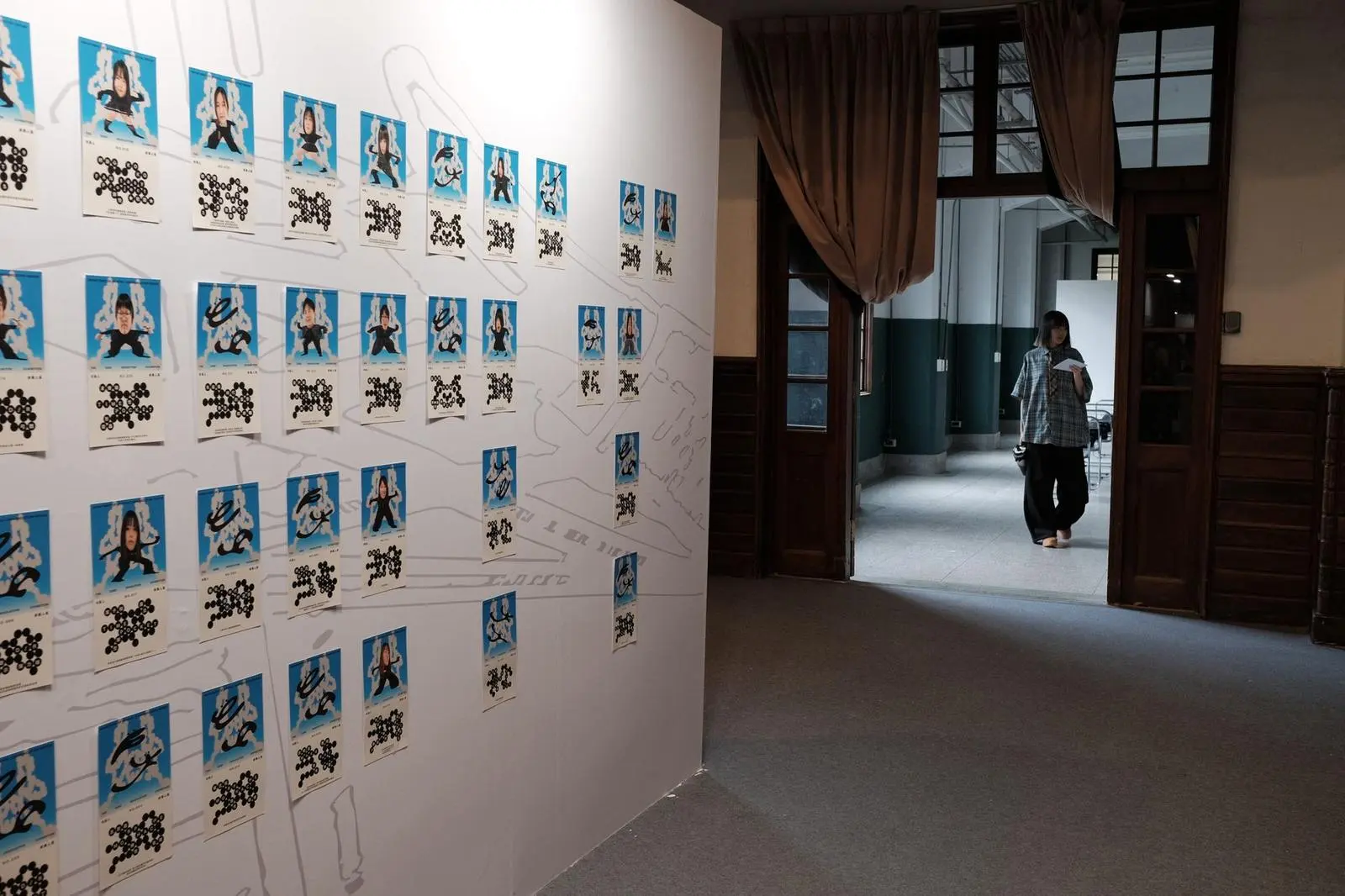
Treat the layout as something to investigate alongside the words. Look across a grouping before approaching an individual work, and ask what becomes noticeable when you see the objects together.
Look for a group label before deciding why neighbouring works belong together. Carleton College’s guidance describes these labels as explaining the rationale behind a subgrouping of objects.
Use comparison to make your reading specific:
- Compare the scale of neighbouring works and your response to each.
- Look for recurring colours, shapes or materials.
- Notice where a grouping changes subject or visual character.
- Check whether the text explains a connection you had not considered.
- Ask whether a contrasting work challenges your first impression.
Avoid assigning intention too quickly. Instead of deciding that an empty stretch of wall must represent isolation, ask whether the exhibition text supports that reading, and keep your impression separate from a documented explanation.
For a hypothetical pairing of a crowded scene with a sparse interior, try the word contrast as a starting point. Ask what the pairing makes you notice about activity or absence, then check whether those ideas fit the exhibition’s stated concerns.
Before leaving a section, turn back for an overview. Choose the connection you find most persuasive and identify the visible detail that supports it; if nothing convincing emerges, carry the question onward.
Test a theme against what you can see
Write a short theme statement in your head or notes. Prefer a proposition you can examine, such as “These works approach home through things people keep,” over a broad label such as “home.”
Build your interpretation through evidence rather than a search for impressive language. Use this sequence as a practical exercise:
- Describe a visible feature without explaining it yet.
- Identify a relevant detail in the accompanying text.
- Suggest how the feature and the text might connect.
- Compare that suggestion with another work in the section.
- Revise the suggestion if the comparison exposes a weakness.
Allow a counterexample to matter. If your theme statement depends on everything feeling nostalgic, examine the work that feels uneasy or unsentimental instead of treating it as an inconvenience.
Keep personal association distinct from a claim about the artist. You might write “This reminds me of a family kitchen” in your own notes without concluding that the artist intended to depict your kind of family experience.
When visiting with someone else, ask for a detail behind their response. “What made the room feel tense to you?” gives you something to examine together without requiring agreement about the whole exhibition.
End this exercise with an open question if that is where the evidence leads. A precise uncertainty is more useful for a return visit than a confident statement you cannot connect to anything on display.
Make the visit manageable
Choose a pace that leaves room to look back and reconsider. Give sustained attention to the works that raise useful questions, and release yourself from the self-imposed task of producing a response to everything.
If text is difficult to read, treat access as a practical concern. The National Museum of Ireland’s guidelines say label location, size and design should make labels easy to view and read; ask the venue whether an alternative text format is available.
Before photographing a label or moving closer to a work, check the venue’s instructions and consult the guide to art gallery etiquette. Keep your viewing choices considerate of other visitors.
Before travelling, check exhibition dates, opening hours and prices directly with the venue. Make planning serve the kind of visit you want, including any access information you need.
Before leaving, make a compact record of your response:
- A work you would like to see again.
- A detail that changed after you read its label.
- A connection between works that seems persuasive.
- A question the exhibition left unresolved.
Use those notes to decide what deserves further attention. You might return to an introductory statement, revisit a difficult grouping or simply spend longer with the artwork that stayed with you.
Frequently asked questions
Should you read the label before looking at the artwork?
Show answer
Try choosing your starting point according to what feels difficult. If the object seems completely unfamiliar, begin with its caption; if the writing distracts you from looking, leave it until you have formed a visual impression.
What if the exhibition title seems unrelated to the art?
Show answer
Keep the title as a possibility rather than forcing each object to illustrate it. At the exit, ask whether you can connect it to a relationship across the display, and leave that connection unresolved if the evidence feels thin.
How can you respond to an exhibition you dislike?
Show answer
Make your criticism precise by identifying where your interest faded or an explanation felt unconvincing. Consider whether your objection concerns the artworks, the presentation or the argument connecting them.
What should you ask gallery staff about a confusing display?
Show answer
Frame a focused request, such as asking where to find background on a particular grouping or whether accompanying reading is available. Point to the passage or object that prompted your question so the conversation has a clear starting place.